
Cities across Europe and the US baked under massive heat domes last week. Just about everyone asked: Is this the new normal?
Will future northern summers be characterised by blistering heat waves that spark fires, play havoc with infrastructure and kill thousands of people?
Scientists don’t have precise answers. But they’ve long warned that more frequent drought, floods, forest fires and storm surges will create mayhem in many parts of the world.
So last week’s record-breaking temperatures should light a fire under world leaders. They must live up to their emissions reduction pledges. But we won’t be able to turn the oil tanker around quickly enough.
Instead, we’ll have to follow in the footsteps of some great civilisations of antiquity and adapt to climate change. Judging by their track record, it won’t be easy, but we can get through it.
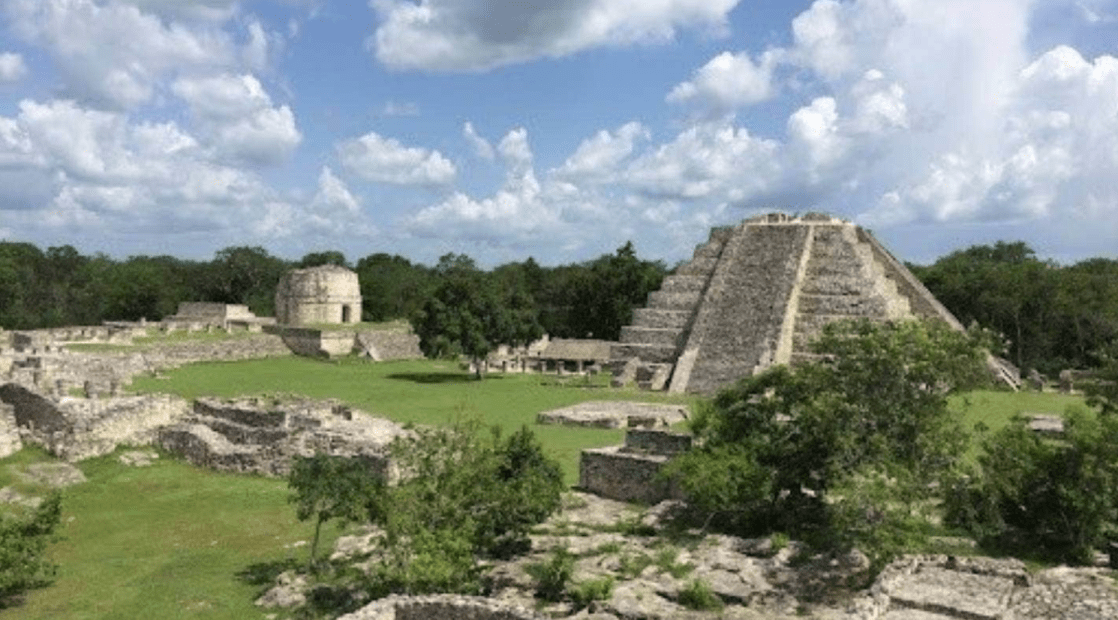
A paper published in Nature Communications last week used historical records, examinations of human remains and indicators of drought conditions to piece together what happened in Mayapan, the political capital of the Maya in the Yucatán Peninsula, when a series of droughts hit the area about 600 years ago.
“Multiple data sources indicate that civil conflict increased significantly, and … correlates strife in the city with drought conditions between 1400 and 1450 CE,” the researchers concluded.
Reducing rainfall likely put pressure on food production and disrupted trade routes which sparked civil unrest and political turmoil. It all unravelled relatively quickly, with the Mayans ultimately abandoning Mayapan, the ruins of which attract tourists from all over the world today.
Similar comparisons of historic records and environmental samples have shown how the collapse of Egypt’s Old Kingdom coincided with a period of arid weather that reduced the summer flooding of the Nile around 2200BC, diminishing crop yields.
The droughts alone didn’t do the Old Kingdom in, but the disruption to the economy and political equilibrium were devastating. Still, Egypt rose again.
“Ancient societies were extremely resilient,” says Nadine Moeller, professor of Near Eastern languages and civilizations at Yale University.
“They would find solutions to get by, to survive. Migration was the most extreme one. There was also increased localised governance in response to the effects of climate change.”
There’s evidence that the Egyptians built grain stores in their towns to ensure there was enough food in reserve to feed the local population when drought hit.
In Maya, the capital lay empty, but the population dispersed to smaller towns where crops yielded enough to sustain the people. As a result, the Mayan civilisation remained intact until the 16th century, when the Spanish arrived to colonise the Mesoamerican region.
We too will have to adapt – and we are better equipped to do so. But with the world’s population approaching 8 billion people, the scope for climate change triggering political instability and conflict in a short period of time is also vastly greater.
Originally published on Stuff.co.nz
 PETER GRIFFIN