
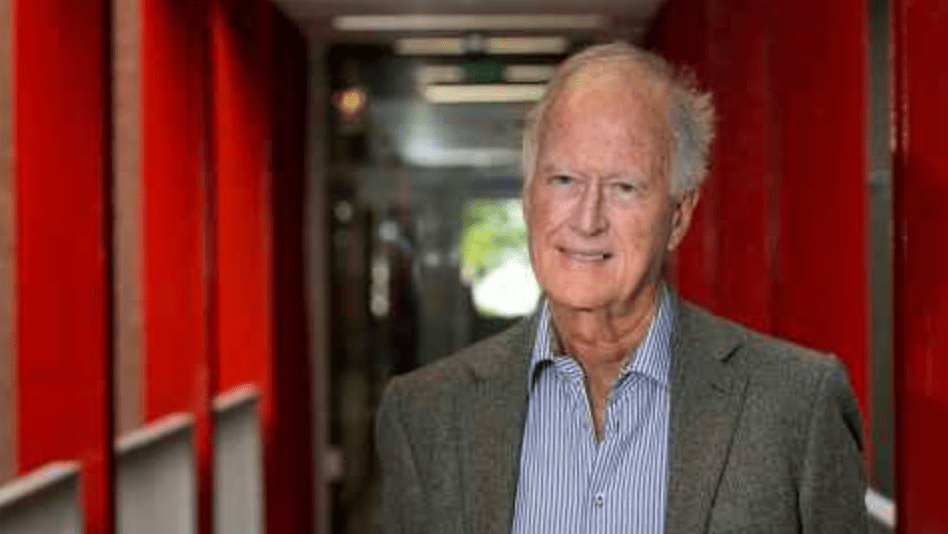
The last time I spoke to Michael Corballis in July, he was immersed in controversy over a letter he and some colleagues had published in the New Zealand Listener.
Corballis, the internationally respected cognitive scientist who contributed to over 400 scientific papers during his illustrious career, was never one to shy away from an argument. In Adventures of a Psychologist, published earlier this year, he wrote that intellectually, “universities should be dangerous places … where religion clashes with atheism, business with philosophy, universalism with nationalism”.
The University of Auckland emeritus professor applied this ethos to his own research, which ranged from exploring brain asymmetry to the evolution of language. A true critical thinker, he helped expand our understanding of the mind and died in October after a short illness aged 85. Corballis was just one scientist we farewelled in 2021.
Another was mathematician Mary Fama, who arrived in New Zealand from Britain after World War II aged 10 and went on to study at Canterbury, Harvard and Oxford. Through a long association with the Department of Scientific and Industrial Research (DSIR) and Australia’s equivalent, the CSIRO, Fama applied the mathematical process of finite element analysis to improve the design and safety of coal mines. She was 82.
Fellow DSIR alumnus George B. Petersen, 88, devoted much of his career to understanding DNA and developing genetic tools and genome sequencing tools to advance knowledge of microbial, plant, animal and human genetics. He worked with Nobel-winner Fred Sanger to sequence the first large viral DNA genome and is considered the key early figure in DNA sequencing in New Zealand.
Auckland-born scientist Una Vivienne Cassie-Cooper, 94, had a prolific research career spanning eight decades. An algae expert, Cassie-Cooper conducted the first survey of New Zealand marine phytoplankton and 19 of her 59 scientific papers were published after her “retirement”.
Another Aucklander, Alan Maxwell, 94, was a pioneer in the detection of radio waves from sun spots. His 1949 thesis was the first in the field of radio astronomy from the University of Auckland physics department. He went on to set up a radio astronomy station for Harvard University in Fort Davis, Texas. He died in San Diego.
John Buckingham, 84, was one of our top military scientists. He applied science and technology to our national security interests in ways that are probably still classified as state secrets. He led the Defence Technology Agency from 1987 to 2005.
The international scientific community lost a number of shining stars this year too. They include Aaron Beck, 100, who developed cognitive therapy; Edmond Fischer, 101, the Nobel Prize winner who discovered how cells talk; Helen Murray Free, 98, a chemist who developed a test for diabetes; Chad Kalepa Baybayan, 64, an authority in celestial navigation; Nobel laureate Isamu Akasaki, 92, who developed LED lighting; Muriel Lezak, 94, a leading brain injury researcher; and Paul Crutzen, 88, who named our age the Anthropocene.
“We all die,” wrote Fight Club author Chuck Palahniuk.
“The goal isn’t to live forever, the goal is to create something that will.”
The great minds we lost in 2021 certainly did that.
Originally published on Stuff.co.nz.
 PETER GRIFFIN