
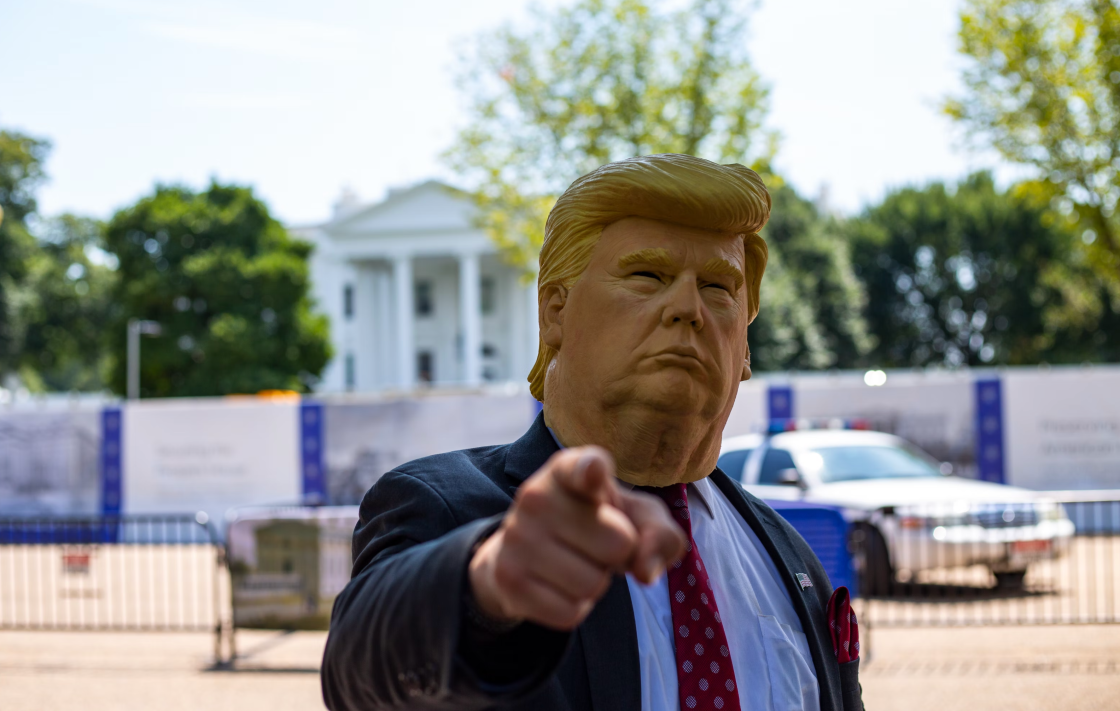
We are just over a week away from Joe Biden’s inauguration as president. That’s if Capitol Hill in Washington, DC, is deemed safe enough from the threat of riots and disorder to allow the ceremony to proceed.
I stood in the freezing cold on the National Mall in January 2013 to watch Obama’s second inauguration. His speech was orderly, dignified and notable for its focus on tackling climate change.
“Some may still deny the overwhelming judgment of science,” said Obama.
“But none can avoid the devastating impact of raging fires and crippling drought and more powerful storms.”
In April 2016, in the dying months of his presidency, Obama signed the Paris climate agreement, which saw 197 states pledge to keep global average temperature to below 2 degrees Celsius above pre-industrial levels.
One of President Trump’s priorities on assuming office in 2017 was to reverse that, withdrawing the US from the Paris agreement. He subsequently gutted the US Environmental Protection Agency of capability and funding, ordered a strategic shift away from clean energy research and diluted science-based efforts to protect the oceans and the Arctic.
But there was worse to come. When the Covid-19 pandemic arrived, Trump hampered efforts to respond to it by promoting pseudoscience. It’s credit to the legions of scientists toiling as part of Project Warp speed that effective vaccines were developed in record time, rather than an administration hell-bent on denying reality.
The US has a vast and productive collection of scientific institutions that are responsible for world-leading research and breakthroughs in everything from medicine and environmental science to nanotechnology and space exploration. Our own scientists have strong collaborations with US researchers and institutions, particularly on climate science and Antarctic research.
Biden’s administration now faces the task of making up for lost time, restoring the role of science in tackling the big problems facing the US and the world. The immediate priority has to be taking an evidence-based approach to containing the pandemic and rejoining the World Health Organisation, which for all its flaws, is crucial to the international effort to deal with Covid-19 and future pandemics.
The early signs are promising. Biden moved quickly to appoint a “Science Team” of credible experts to advise his administration. As a result of that, we should see the US start to take a more active role in bodies such as the Intergovernmental Panel on Climate Change (IPCC) and the Arctic Council.
Biden not only has to rebuild and extend scientific capability, but restore the public’s trust in science, which has been undermined by “Sharpiegate” and countless other attacks on science led by Trump himself.
Trust in science will be key to the effective roll-out of vaccines during 2021 here. Research suggests that 30 per cent of New Zealanders are “vaccine sceptics”. That’s a worrying sign. Our government has done a good job of feeding scientifically accurate information to the public during the pandemic.
But the US has oversized international influence. Its new leadership needs to undo the legacy of four years of disinformation and science denial for the good of everyone.
Originally published on Stuff.co.nz.
Photo credit: Darren Halstead
 PETER GRIFFIN