
Last week’s blitz of climate change-related coverage may have left you despairing about the future we face in a warming world.
Sorry, we need to hear it. But there’s another narrative emerging about the innovation underway to speed up the transition to the low carbon economy required to avoid the worst-case climate scenarios.
Last week also saw $37 million of cash dispensed from the Government’s Endeavour Fund for low carbon research projects.
One that could make a real impact soon is the $10.7 million given to GNS Science for next-generation geothermal power.
Geothermal is the overlooked hero of renewable energy. It is more consistent than hydro, solar and wind, as it doesn’t rely on the weather.
It can operate all year and uses a small footprint of land.
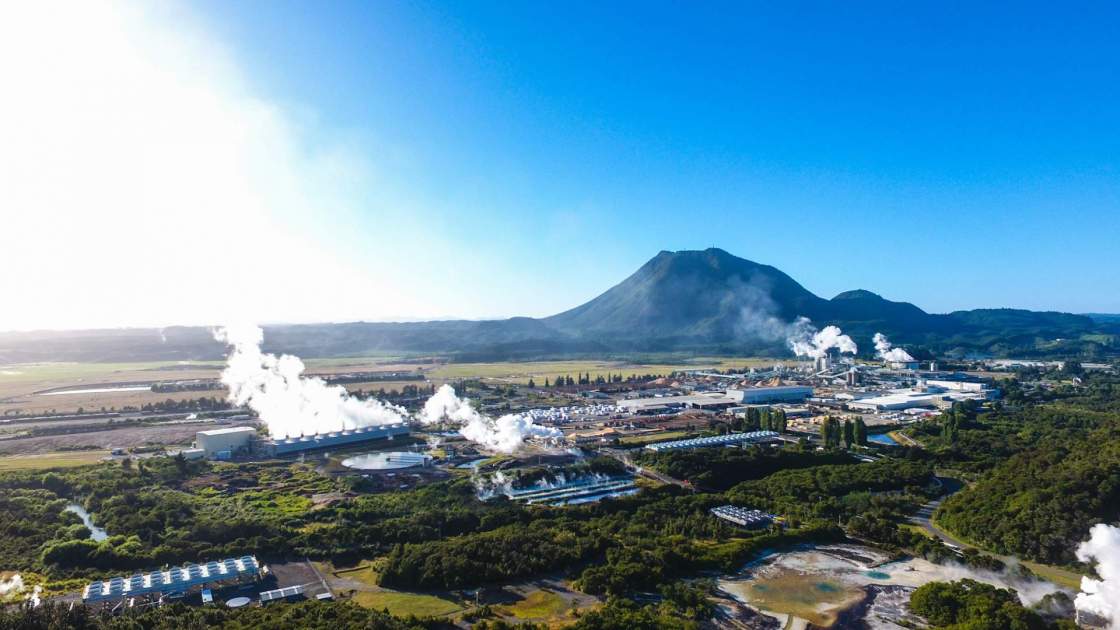
We were the pioneering country in geothermal back in 1958 when the Wairakei geothermal power plant opened.
It works by tapping hot water stored in the rocks deep in the earth’s crust, which turns to steam as it is brought to the surface and is used to power turbines in the plant, which is captured by generators to produce electricity.
I still love driving by Wairakei and seeing the network of snaking pipes and the clouds of steam they produce.
Owned by Contact Energy, Wairakei and a number of other geothermal plants, mainly in the Taupo region, now generate about 17 per cent of the country’s electricity supply.
Now GNS scientists are accelerating their efforts to drill deeper, which will let them access hotter fluids and produce more energy.
GNS estimates that there could be at least 10,000MWe (megawatt electrical) of accessible deep geothermal resource beneath the Taupo Volcanic Zone alone.
But new drilling techniques are required to reach it and tap it.
Other countries are starting to go deep too. Engineers in the UK just drilled one of the deepest geothermal wells for an electric power plant, going to a depth of nearly 5km. It wasn’t straight down either – the well in Cornwall is J-shaped.
Geothermal can be expensive and technically challenging, but it has huge potential as a source of clean energy that could see us through the next 100 years and beyond.
We’ll need to ramp up our investment in it and other types of low carbon energy to have a shot of being carbon-zero by 2050.
Originally published on Stuff.co.nz.
 PETER GRIFFIN